 DANJJAK
Emollients are the plain, unglamorous products that soften and moisturise dry skin, and they sell steadily all year in Singapore's air-conditioned offices and homes. Aqueous cream is a light, water-based cream; white soft paraffin is a thick, greasy ointment; urea and dimethicone creams sit somewhere in between. This guide sets out what the packs we carry actually list, how to tell them apart at a glance, and which customer questions should go straight to a pharmacist.
What "emollient" means on a label
An emollient is anything that softens the skin and helps hold moisture in. The word covers a wide range of textures, and that range is the main thing staff need to understand. A runny cream feels pleasant and disappears quickly. A stiff ointment feels greasy but stays put. Customers usually know which texture they will actually use, so the most helpful thing a shop can do is offer both ends of the scale and explain the difference in plain words.
All four products below come from ICM Pharma and carry the origin code SG in our catalogue.
Aqueous cream: the light, multi-purpose option
ICM Pharma Basic Aqua Cream is a 100g aqueous cream. Its ingredient list reads: purified water, white soft paraffin, cetostearyl alcohol, ceteareth-20, liquid paraffin and phenoxyethanol. The label describes it as a moisturiser and skin cleanser for dry or sensitive skin, and says it is free from SLS, paraben, fragrance and colour.
What makes it useful for a shop is that the pack gives three separate uses:
- as a moisturiser, "apply frequently to affected areas or as directed by a physician"
- as a soap substitute, "wet skin, rub on Basic AquaCream, then rinse with water"
- for make-up removal, "apply directly with the aid of a cotton ball, then rinse with water"
That flexibility means it can sit with skin care, bath products or make-up removers. If you only have room for one facing, Basic Aqua Cream is the easiest to explain.
White soft paraffin and the 60/40 ointment
ICM Pharma BASIC Paralin is White Soft Paraffin BP, sold in 100g. The label describes it as a moisturiser and emollient for "dry, rough, scaling skin or chapped lips", and as a barrier to protect sensitive skin from minor irritations such as nappy rash and from exposure to harsh chemicals. The usage line is short: "Apply liberally to affected areas."
The same listing covers BASIC Dermalin, a 60% white soft paraffin and 40% liquid paraffin ointment. The pack says it is softer and easier to spread than pure white soft paraffin, and that it can be used in place of soap when washing. Customers who find plain paraffin too stiff often ask for exactly this, so it helps if staff know the two names belong together.
Urea and dimethicone creams: close relatives
Two neighbours often get asked for in the same breath.
Aqurea Moisturising Cream (100g) contains urea 10%. Urea is a humectant, meaning it attracts water, and the label calls the product a hydrating emollient that is fragrance, colour and SLS free. The pack's own directions are to cleanse the skin first and apply "2-3 times daily or as directed by a physician". Its warnings note that urea may be irritating to sensitive skin and that use should stop if irritation occurs.
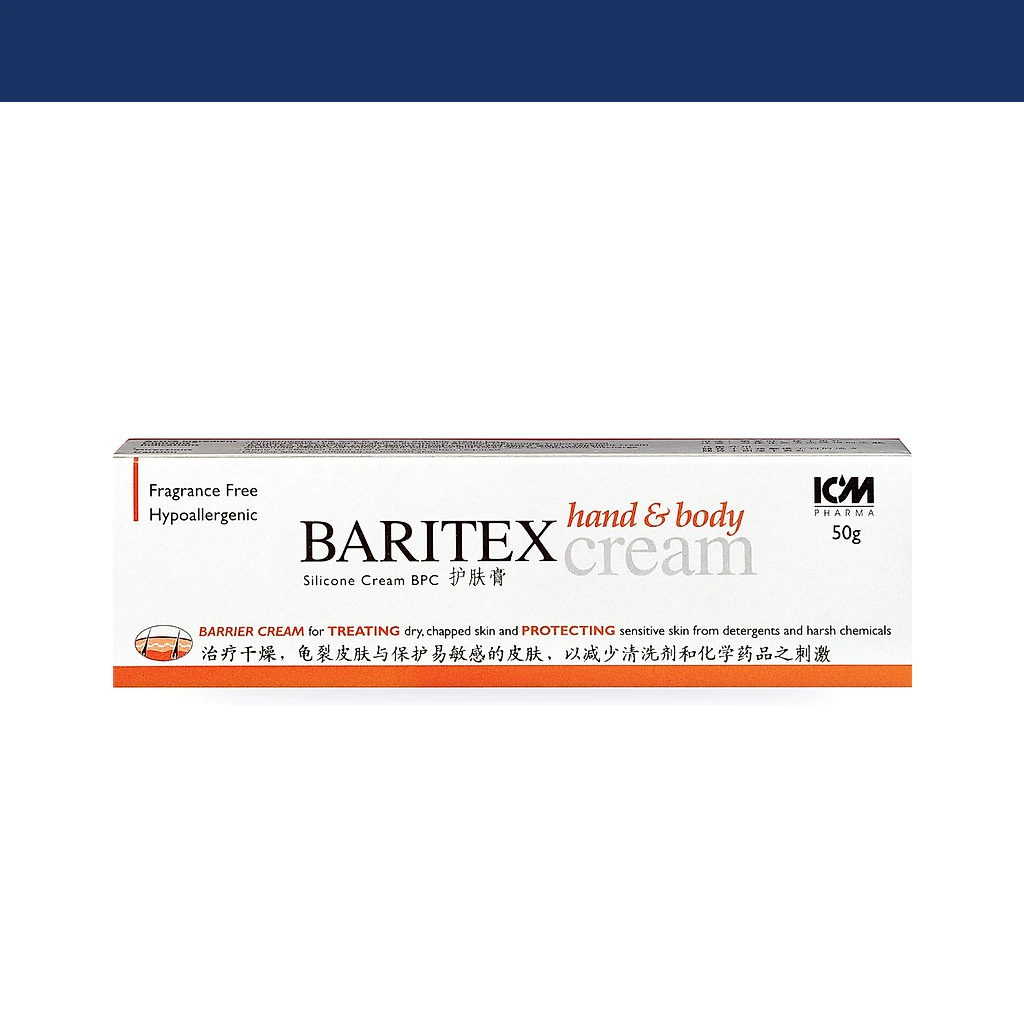
Baritex Cream (50g) contains dimethicone 10% in a water-miscible base. The label describes it as a barrier cream against moisture loss and a water-repellent cream to protect against detergents and chemical irritants, and lists nappy rash among its uses. The warning to point out is "Do not apply to inflamed or broken skin."
Shelving and storing emollients
A few practical points from running a shelf:
- Arrange by texture, lightest to heaviest: aqueous cream, urea cream, barrier cream, then paraffin ointments. Customers scan left to right and understand the gradient without being told.
- Keep a second facing of paraffin and barrier creams near baby care, since both labels mention nappy rash.
- Fragrance-free and colour-free claims are printed on several of these packs. Face those panels outward; they answer a common question before it is asked.
- The catalogue listings do not give storage temperatures for these products. Read the carton when stock arrives and keep any shelf away from direct sun and heat, which is good practice for creams in general.
Questions to pass to a pharmacist
Emollients feel low risk, but some conversations are not for the till. Staff should refer the customer to a pharmacist or doctor when:
- they ask whether a product suits a named skin condition such as eczema or psoriasis
- the skin is cracked, weeping, bleeding or looks infected
- the product is for a baby and the rash is spreading or not settling
- they want to use it on the face or near the eyes and the pack does not say it is suitable
- they have reacted to a cream before
A simple line works: "That's a good question for the pharmacist, they can look at it properly." For customers who mention itching between the toes or a ring-shaped rash, it is worth knowing what else sits on the shelf; our guide to clotrimazole and miconazole creams covers that, but the choice itself belongs with a pharmacist.
Creams like these are regulated in Singapore by the Health Sciences Authority (HSA), and the rules can differ between cosmetics and medicines. Check with HSA what applies to your business before you list a product. For more on building out the rest of a counter, see stocking an everyday pharmacy shelf, or browse the full skincare range.
Ordering for your shop
If you would like pricing or current availability on any of these emollients, add them to an enquiry list and the DANJJAK team will come back with a quote, minimum order and stock position.
This article is general product information for businesses, not medical advice. For questions about symptoms or treatment, speak to a pharmacist or doctor.