 DANJJAK
Japanese eye creams are small, considered purchases, so the best way to stock them is to carry a few clearly different options and be able to explain the label of each one. Start with what the customer says bothers them (dryness, a tired look, fine lines), match it to the wording on the pack, and keep the conversation to what the brand itself says.
What makes an eye cream different from a face cream
The skin around the eyes is thinner than on the rest of the face, and it is close to the eye itself, so eye creams are usually made in small sizes with textures meant to be applied with very light pressure. Their directions almost always say to avoid rubbing or pulling.
For a shopper, the practical differences are size, texture and the way the product is directed. A 20g jar or tube is typical and lasts a while because only a small amount is used each time. Small packs suit a compact shelf, but the price per gram also means customers tend to think harder before buying, and they appreciate someone who can tell variants apart.
Two Japanese ranges, read label by label
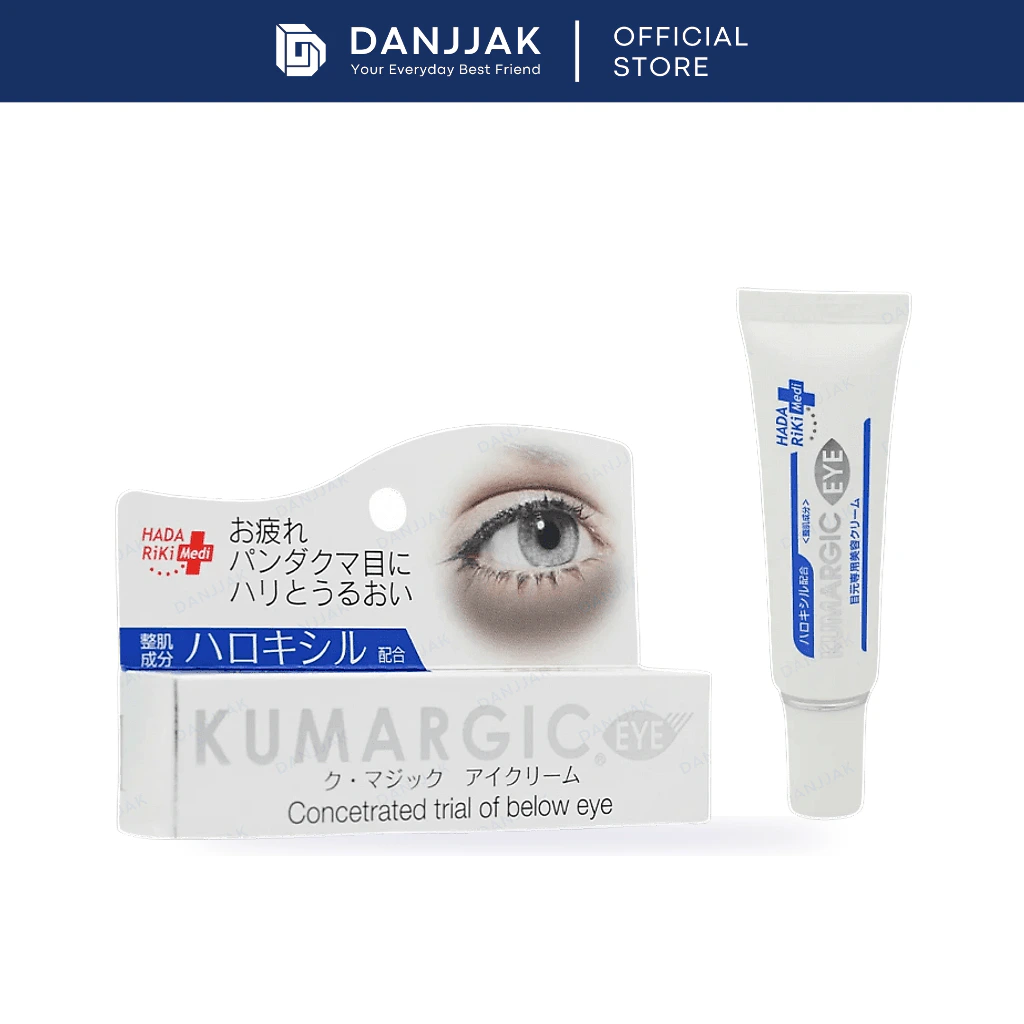
HADARIKI Medi KUMARGIC Eye Cream
This 20g cream is made in Japan and aimed specifically at the under-eye area. The brand describes it as targeted under-eye care for tired and dark-looking eye areas, formulated with Haloxyl (which the listing calls an eye-area conditioning ingredient) and collagen to provide moisture and help the area look firmer and more refreshed. The full ingredient list also includes squalane, dimethicone and dipotassium glycyrrhizate, and it contains parabens, which is worth knowing for customers who check.
Directions say to use it morning and evening after cleansing and toner, and to smooth it gently over the under-eye area without rubbing harshly. You can see the full listing on the HADARIKI product page.
SANA Nameraka Honpo Eye Cream
SANA's soy milk range offers three 20g eye creams, and the brand helpfully sets out who each is for:
- 4-in-1 Plumping Eye Cream NC: the listing says it helps moisturise the eye area and leave it looking plump and supple. Suggested for dryness, lack of plumpness and dark undereyes.
- Wrinkle Eye Cream N: described as containing pure retinol and providing moisture and firmness. Suggested for fine lines, dryness and loss of firmness.
- Medicated Wrinkle & Brightening Eye Cream: a medicated version with niacinamide. Suggested for wrinkles, brightening care and dark spot prevention.
The directions say to use it as the last step of a skincare routine, apply gently around the eye area, and follow with sunscreen during the day.
Matching variants to customers
Because the SANA range splits so neatly, it is easy to guide a customer through it with two or three questions. Ask what they notice most, whether they already use other active products, and whether they want something for morning, night or both.
A few points are useful to keep in mind:
- Customers trying a retinol product for the first time often ask how to fit it into a routine. That's a fair question to pass to a pharmacist, particularly if they use other strong skincare or are pregnant.
- The medicated SANA version sits in a specific Japanese category. If you want to understand what "medicated" means there, read what "medicated" means on Japanese skincare labels.
- Persistent swelling, puffiness that comes and goes suddenly, or irritation around the eyes is a reason to see a doctor, not to try a new cream.
Placing eye creams on the shelf
Eye creams sell best near the serums and moisturisers they will be used with, not in a separate corner. Put the variant names facing forwards and add a simple card that repeats the brand's own "best for" wording. Shoppers comparing three similar jars will read that card before they read anything else.
Because SANA's own directions mention following with sunscreen in the daytime, a light sunscreen placed nearby makes a natural pairing. Our guide to Japanese sunscreen formats explains which textures sit comfortably over an eye cream and under makeup.
For salons and clinics with a small retail corner, one under-eye focused cream plus one range with clear variants covers most requests without tying up much stock. You can see both ranges alongside other facial products in the skincare category.
Keeping claims in check
Eye care is an area where marketing language runs ahead quickly. Stick to what is printed on the pack, attribute it ("the brand says", "the listing describes"), and avoid promising that dark circles or lines will disappear. Both ranges carry standard warnings: avoid direct contact with the eyes, and stop using the product and seek advice from a doctor if redness, swelling, itching or irritation appears.
Requesting stock
If you'd like to carry one or both of these ranges, add the variants you need to your enquiry list. Mention which SANA versions you want and roughly how many, and we'll reply with prices, minimum order and what is in stock.
This article is general product information for businesses, not medical advice. For questions about symptoms or treatment, speak to a pharmacist or doctor.