 DANJJAK
Wart and corn solutions are some of the strongest products most small shops will sell over the counter, even though they come in tiny bottles. Both lines in our range use salicylic acid, which is a keratolytic, meaning it softens and loosens hard, thickened skin. The two packs differ in strength, extra ingredients and how often they are applied, and both carry warnings that staff need to know. This guide explains them side by side.
How these solutions work on the shelf
A salicylic acid wart or corn product is a liquid painted onto a small patch of hard skin, usually with a brush built into the pack. As it dries it leaves a film. Because the acid acts on skin, the main safety idea is simple: keep it on the hard skin and off the healthy skin around it.
The two products we carry:
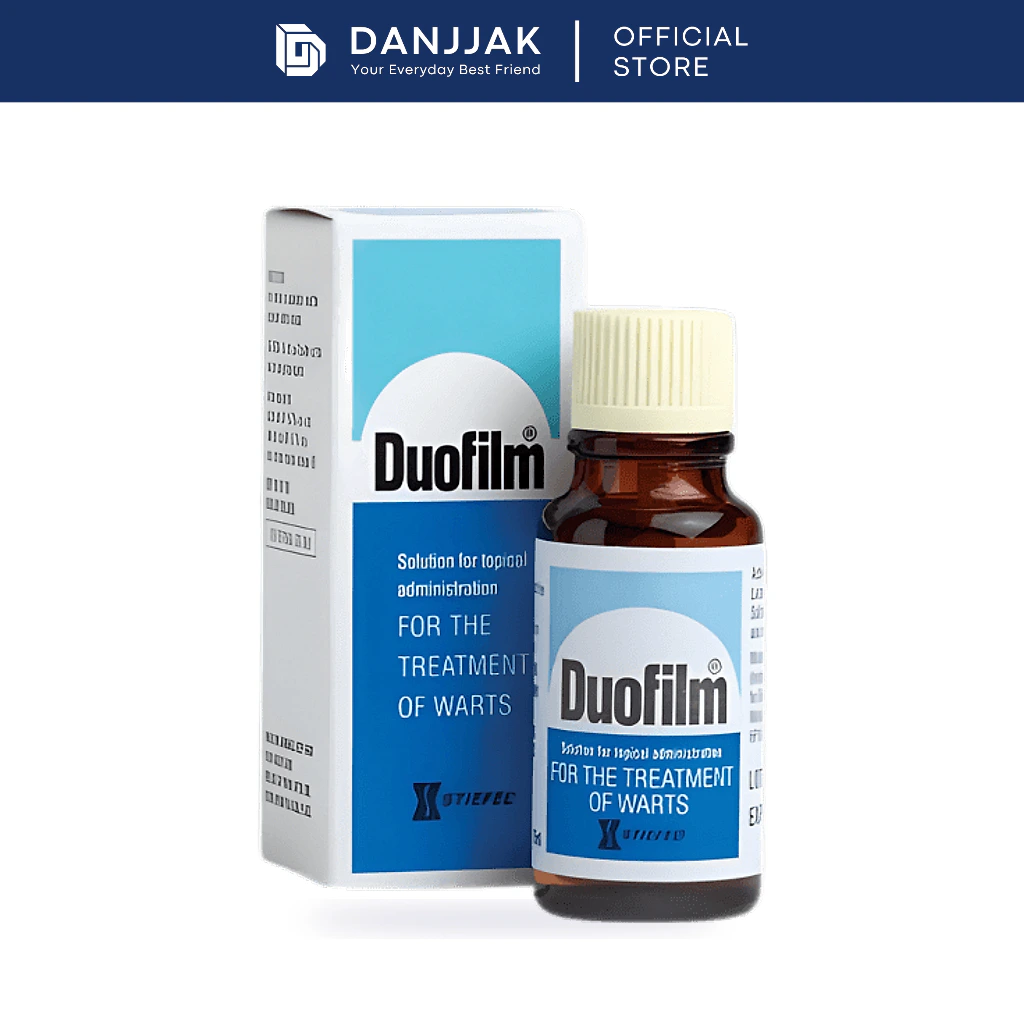
- Duofilm Solution, 15ml: salicylic acid 16.7% w/w and lactic acid 15.0% w/w, and it also contains colophony.
- Collomack Topical Salicylic Acid Solution, 10ml: described as a 10% solution of salicylic acid in an organic solvent mixture. Its catalogue origin is DE.
Duofilm: once a day, before bed
The Duofilm label says it is for warts, corns and calluses on hands and feet, for adults and children aged 2 and over. Its usage begins: "Use Duofilm once a day, before bedtime, using the brush in the pack."
The pack then sets out a numbered routine. The first steps are:
- Soak the wart in warm water for 5 minutes and dry it thoroughly with a clean towel.
- Rub the surface with a nail file, pumice stone, emery board or coarse washcloth, taking care not to cause bleeding.
- Apply a thin layer directly to the wart.
The full steps are in the leaflet. Staff should point customers to it rather than paraphrase.
Duofilm's warnings read: "Do not use on open wounds, irritated or reddened skin, or any area that is infected" and "Treatment of infants under the age of 2 years is not recommended."
Colophony, also called rosin, is listed on the pack. Some people are sensitive to it, so a customer who has reacted to plasters or adhesives before should check with the pharmacist.
Collomack: twice a day, film removed between coats
Collomack's label says: "Unless otherwise prescribed by your doctor, for warts, corns and calluses apply COLLOMACK twice a day to the areas to be treated using the brush attached to the bottle cap." It goes on to say the remaining film should be removed before the next application, that the solution should not touch healthy skin, and that treatment should continue for a week after symptoms have gone.
Its warnings are more detailed than most. The pack asks customers to tell their doctor or pharmacist about other medicines they take, including non-prescription ones. It notes that salicylic acid can increase how much of other skin products is absorbed, and that if it reaches the bloodstream it can interact with methotrexate and with medicines that lower blood sugar.
That last point is a clear signal for staff. Anyone who mentions diabetes, or takes regular medicines, should talk to a pharmacist before buying.
Questions that should go to a pharmacist or doctor
Not every bump is a wart, and not every hard patch is a corn. Refer the customer when:
- they are not sure what the lesion is, or it has changed colour, shape or size
- it is on the face, the genitals, or near the eyes or mouth
- it bleeds, is painful, or looks infected
- they have diabetes or poor circulation, especially if the problem is on the feet
- it is for a child, particularly under the age on the pack
- they are pregnant or take regular medicines
Staff can say: "These are strong products, so the pharmacist will want to have a look first." Anyone with symptoms that concern them should see a pharmacist or doctor.
Storage and shelf placement
- Collomack uses an organic solvent. Check the carton for any storage or flammability instructions and keep stock away from heat and direct sun.
- Small bottles go missing easily. Keep them behind the counter or in a locked display if your layout allows.
- Shelve wart and corn treatments with foot care, near pumice stones and corn pads, but clearly separate from moisturisers.
- Check expiry dates on arrival, since slow-moving lines can sit for months.
Medicines sold in Singapore are regulated by the Health Sciences Authority (HSA). Businesses should check with HSA what applies to them before stocking wart and corn solutions. If you are building a first aid and skin section around these, our guide to antiseptics and 70% alcohol covers the neighbouring shelf.
Getting a quote
You can view Duofilm Solution, Collomack and other skin treatments in our health category. Send us the lines and quantities you are considering through the contact page, and we will reply with pricing and stock.
This article is general product information for businesses, not medical advice. For questions about symptoms or treatment, speak to a pharmacist or doctor.